Pico Laser vs Laser Toning: What’s the Difference?
Pico Laser vs Laser Toning: What’s the Difference?
Pico laser and laser toning are both popular non-invasive treatments for pigmentation and uneven skin tone, especially in Korean dermatology clinics. Although the two treatments can be used for similar concerns, they differ in their laser technology, pulse duration, energy delivery, and treatment approach. Pico laser uses ultra-short picosecond pulses to target pigment, while laser toning generally refers to a low-fluence laser treatment designed to gradually improve pigmentation and overall complexion. Understanding these differences can help patients choose a treatment that better matches their skin concerns.
What Is Pico Laser?
Pico laser uses extremely short laser pulses measured in picoseconds. The rapid energy delivery can fragment pigment into smaller particles while minimizing prolonged heat exposure to the surrounding skin. Depending on the device and wavelength, Pico laser can be used for both pigmentation and certain skin texture concerns.
Pico laser may be used for:
- Freckles
- Sun spots
- Age spots
- Post-acne pigmentation
- Uneven skin tone
- Dull-looking skin
- Enlarged pores
- Certain types of acne scars and uneven texture
Different Pico laser modes can be selected depending on the patient's skin condition and treatment goals.
What Is Laser Toning?
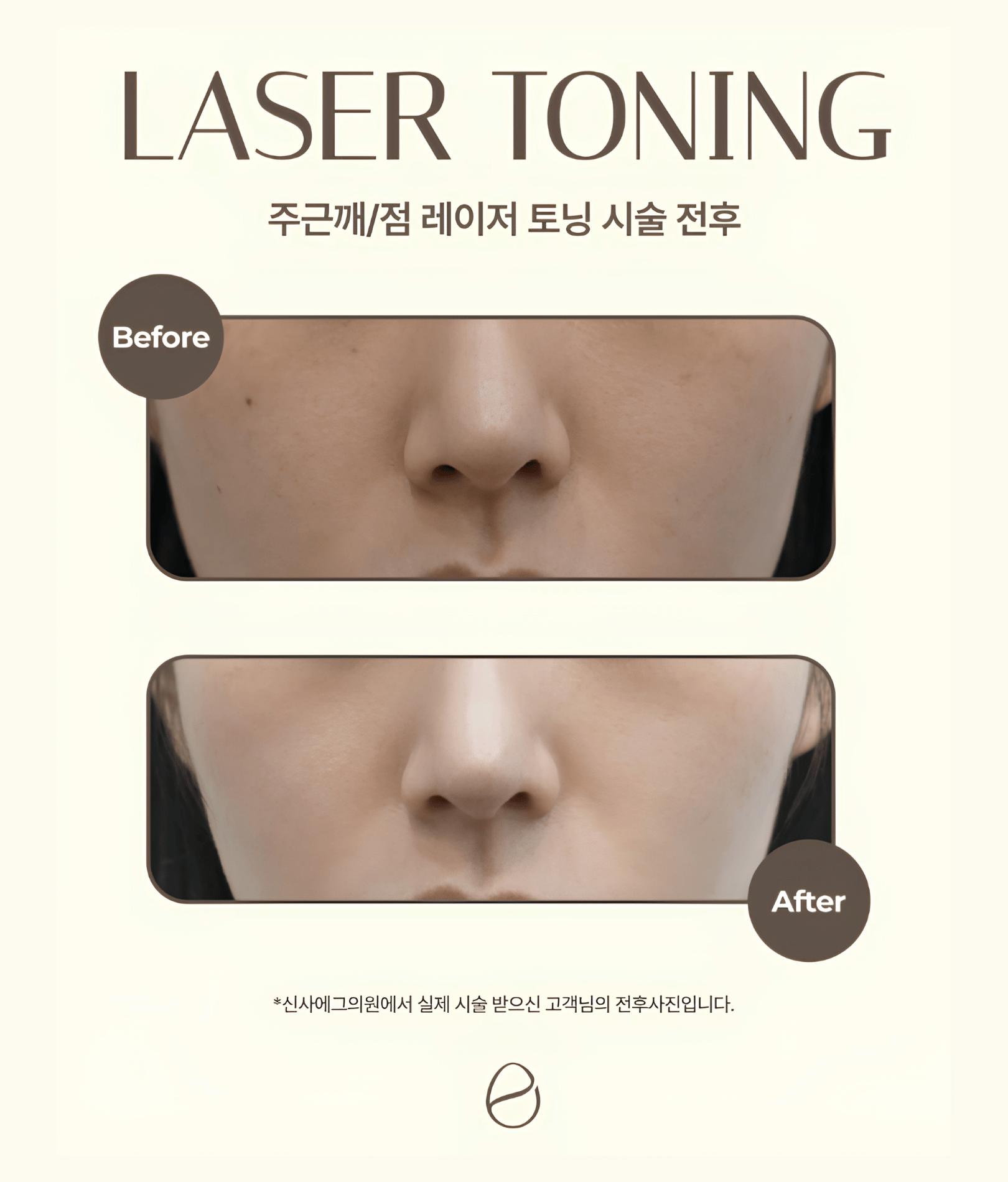
Laser toning is a low-fluence laser treatment commonly used to gradually improve pigmentation and create a brighter, more even complexion. In Korea, the term often refers to low-energy Q-switched Nd:YAG laser treatments, although the exact device and protocol can vary between clinics.
Laser toning is commonly considered for:
- Mild pigmentation
- Uneven skin tone
- Dullness
- Freckles
- Melasma management
- Post-inflammatory pigmentation
- Overall skin brightening
Rather than aggressively targeting individual dark spots, laser toning is generally performed with relatively low energy over the treatment area and may be repeated as part of a series.
Pico Laser vs Laser Toning: Key Differences
The main difference is the way laser energy is delivered. Pico laser uses extremely short picosecond pulses, whereas traditional laser toning generally uses longer nanosecond pulses at low fluence.
Pico laser:
- Uses picosecond pulses
- Can deliver highly targeted energy
- May provide stronger pigment fragmentation
- Can be customized for specific pigmentation
- Certain modes can address texture and pores
- May be used for individual spots or broader areas
Laser toning:
- Commonly uses low-fluence Nd:YAG laser energy
- Uses a gradual treatment approach
- Often covers the entire treatment area
- Commonly used for complexion brightening
- Can be incorporated into repeated pigmentation management
- Often involves minimal downtime
The specific results depend on the device, wavelength, settings, and treatment protocol rather than the treatment name alone.
Which Is Better for Pigmentation?
Neither treatment is universally better. Pico laser may be more suitable when the primary concern is defined pigmentation that requires more targeted energy. Laser toning may be preferable when the goal is gradual improvement of overall pigmentation and skin tone.
For example:
- Individual freckles or sun spots: Pico laser may be preferred
- Diffuse uneven skin tone: Laser toning may be suitable
- Overall brightening: Both can be considered
- Persistent pigmentation: A customized medical approach is important
- Melasma: Low-fluence treatment may be considered depending on the patient's skin
- Pigmentation plus texture concerns: Pico laser may offer additional treatment options
A dermatologist should determine the appropriate approach after evaluating the type and depth of pigmentation.
Pico Laser vs Laser Toning for Melasma
Melasma requires particular care because it can be chronic and may become darker or recur after inappropriate treatment. The goal is not necessarily to remove every area of pigment as quickly as possible but to control pigmentation while minimizing irritation and inflammation.
Laser toning has traditionally been used in Korea as part of a gradual approach to melasma and diffuse pigmentation. Pico laser may also be considered in selected patients and with appropriate settings. However, stronger treatment is not automatically better for melasma.
Important considerations include:
- Skin type and sensitivity
- Depth and distribution of pigmentation
- Previous laser treatments
- History of pigmentation recurrence
- Sun exposure
- Current skincare routine
- Risk of post-inflammatory hyperpigmentation
Downtime and Recovery
Both Pico laser and laser toning generally have relatively little downtime compared with more aggressive resurfacing treatments. However, the recovery experience can vary depending on the energy level and treatment protocol.
After Pico laser, patients may experience:
- Mild redness
- Warmth or sensitivity
- Temporary darkening of pigment
- Small crusts with stronger settings
After laser toning, patients may experience:
- Mild redness
- Temporary warmth
- Slight sensitivity
- Minimal visible peeling or crusting in many cases
Regardless of the treatment, daily sunscreen use and gentle skincare are important after laser procedures. Patients should also avoid unnecessary sun exposure and follow the clinic's specific aftercare instructions.
How Many Treatments Are Needed?
The number of sessions depends on the pigmentation being treated and the intensity of the treatment. A single Pico laser session may produce visible changes in certain superficial spots, but multiple treatments are often recommended for more persistent concerns.
Laser toning is typically associated with a series of treatments because its approach is gradual. The treatment schedule may be adjusted according to the patient's response rather than following an identical protocol for everyone.
Factors that influence the treatment plan include:
- Type of pigmentation
- Pigment depth
- Skin tone
- Treatment area
- Laser settings
- Previous treatments
- Desired outcome
- Skin response after each session
How to Choose Between Pico Laser and Laser Toning
Choosing between Pico laser and laser toning should begin with identifying the primary skin concern. If you want targeted treatment for visible freckles or sun spots, Pico laser may be a more appropriate option. If your main goal is gradual brightening and improvement of diffuse pigmentation, laser toning may be considered.
A consultation should evaluate:
- What type of pigmentation you have
- Whether the pigment is superficial or deeper
- Whether you have melasma
- How sensitive your skin is
- Your previous experience with lasers
- How much downtime you can tolerate
- Whether you also want to improve pores or skin texture
This personalized assessment is especially important for patients who are prone to pigmentation after skin irritation.
Final Thoughts
Pico laser and laser toning are both useful options for improving pigmentation, but they take different approaches. Pico laser uses ultra-short pulses for more targeted pigment treatment and can offer additional options for texture, while laser toning generally uses low-fluence laser energy for gradual improvement of pigmentation and overall skin tone. The best choice depends on your specific pigmentation, skin type, treatment history, and desired results. Instead of choosing based solely on the name of the technology, a personalized treatment plan can help achieve more consistent and natural-looking skin improvement.