Best Treatments for Enlarged Pores in Korea
Best Treatments for Enlarged Pores in Korea
Enlarged pores are one of the most common reasons patients seek dermatology treatment in Korea. Korean clinics offer a wide range of options, including RF microneedling, fractional lasers, Pico Laser, chemical peels, and injectable skin boosters.
However, there is no single treatment that is best for every type of enlarged pore. Pores can become more visible because of excess sebum, clogged follicles, collagen loss, reduced elasticity, acne scars, dehydration, or a combination of these factors.
The best treatment is therefore the one that addresses the main reason your pores look enlarged.
For many patients, Potenza RF microneedling is one of the most targeted options for pores associated with collagen loss and uneven texture, while Pico Laser and fractional lasers may be more appropriate when pigmentation or surface texture is also involved. Skin boosters such as Rejuran and Juvelook can be considered when improving overall skin quality and collagen support is part of the goal.
Why Do Pores Look Enlarged?
Pores are normal structures connected to hair follicles and sebaceous glands. They cannot be permanently eliminated or literally closed.
Their appearance can change depending on several factors:
- Excess sebum production
- Clogged pores and dead-cell buildup
- Reduced collagen around the pore
- Loss of skin elasticity
- Sun exposure
- Acne and previous inflammation
- Dehydration
- Natural skin type and genetics
- Aging
The shape of the pore can also provide clues.
Round or horizontally enlarged pores are often more associated with oil and congestion, while vertically elongated or teardrop-shaped pores can become more noticeable as the surrounding skin loses firmness.
Many people have more than one cause, which is why combination treatment is common in Korean dermatology.
Potenza RF Microneedling for Enlarged Pores
Potenza is one of the most popular RF microneedling options for enlarged pores in Korea.
It uses fine needles to deliver radiofrequency energy into controlled depths of the skin. The combination of microneedling and RF stimulation can encourage collagen remodeling and improve the structural support surrounding visible pores.
Potenza may be particularly suitable when enlarged pores are accompanied by:
- Uneven skin texture
- Mild skin laxity
- Acne scars
- Loss of firmness
- Rough skin
- Oily or combination skin
One of Potenza's major advantages is customization. Needle depth, RF energy, treatment mode, and tip selection can be adjusted according to the patient's skin and the area being treated.
Best for: enlarged pores with texture, collagen loss, acne scars, or mild laxity.
Fractional Laser for Enlarged Pores
Fractional laser treatments use controlled laser energy to create microscopic treatment zones in the skin. The resulting healing response can stimulate collagen remodeling and improve surface texture.
Depending on the laser and wavelength, fractional treatments may be considered for:
- Enlarged pores
- Acne scars
- Rough texture
- Fine lines
- Sun damage
- Uneven skin surface
Fractional laser can be particularly useful when enlarged pores are combined with significant textural irregularity or acne scarring.
The trade-off is that stronger fractional laser treatments can involve more visible redness, dryness, peeling, or downtime than lower-intensity pore treatments.
Best for: enlarged pores with more pronounced surface texture, acne scars, or photodamage.
Pico Laser for Enlarged Pores
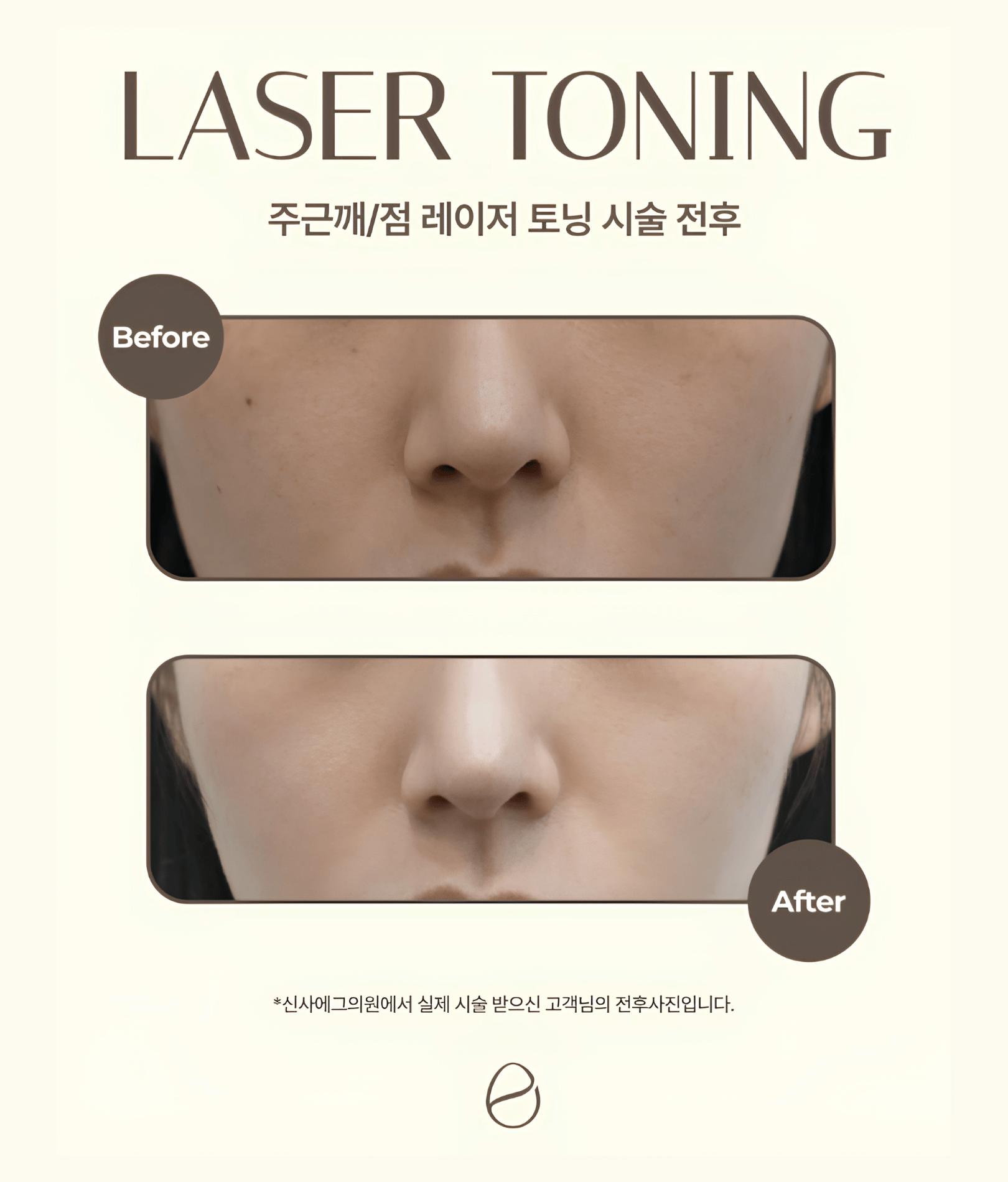
Pico Laser is primarily known for pigmentation and skin-tone improvement, but certain Pico protocols can also contribute to smoother-looking skin and improved overall texture.
It may be considered when visible pores occur alongside:
- Post-acne pigmentation
- Freckles
- Sun spots
- Uneven skin tone
- Dullness
- Mild texture irregularity
Pico Laser is generally not the most direct treatment for structurally enlarged pores. If pore size is the main concern, RF microneedling may be more targeted.
However, Pico can be useful when the goal is to address pores plus pigmentation or dullness at the same time.
Best for: mild pore concerns combined with pigmentation and uneven skin tone.
Rejuran for Enlarged Pores
Rejuran is a polynucleotide-based injectable treatment designed primarily to improve skin quality rather than physically reduce pore openings.
By supporting skin regeneration, hydration, and elasticity, Rejuran may make pores appear less noticeable when poor skin quality contributes to their appearance.
Rejuran can be particularly attractive for patients with:
- Thin skin
- Dehydration
- Fine lines
- Reduced elasticity
- Fragile-looking skin
- Early signs of skin aging
It is important to understand that Rejuran is not a conventional pore-shrinking treatment. Its potential benefit comes from improving the surrounding skin.
Best for: enlarged pores combined with thin, dry, or aging skin.
Juvelook for Enlarged Pores
Juvelook combines PDLLA and HA and is used in Korea as a collagen-stimulating injectable treatment.
It can be considered when enlarged pores are associated with:
- Reduced skin firmness
- Uneven texture
- Fine lines
- Collagen loss
- Shallow acne scars
Compared with Rejuran, Juvelook is generally more focused on collagen stimulation and structural skin remodeling.
This makes it an interesting option for patients whose pores are visible because the surrounding skin has lost firmness.
Results develop gradually as collagen remodeling occurs rather than producing an immediate pore-tightening effect.
Best for: enlarged pores with reduced firmness, texture irregularities, and collagen loss.
Chemical Peels for Clogged and Oily Pores
Chemical peels can be useful when excess oil, dead skin cells, and congestion are major contributors to visible pores.
Depending on the formulation, peels can help:
- Exfoliate dead skin cells
- Improve clogged pores
- Reduce surface oil
- Smooth rough skin
- Improve acne-prone skin
- Refine overall texture
AHA and BHA-based treatments may be considered for different skin concerns, while stronger peels require more careful medical assessment.
Chemical peels generally do not provide the same collagen-remodeling effect as RF microneedling or fractional laser, so they are often more appropriate for congestion-driven pores than pores caused primarily by collagen loss.
Best for: oily, congested, blackhead-prone, or clogged pores.
Skin Botox for Pores
Skin Botox, sometimes called micro-Botox or mesobotox, uses highly diluted botulinum toxin injected very superficially into the skin.
Unlike conventional Botox, which is primarily injected into muscles to reduce dynamic wrinkles, superficial skin Botox is used in selected protocols to improve the appearance of pores, oiliness, and skin smoothness.
It may be considered for patients with:
- Oily skin
- Visible pores
- Fine surface lines
- Excessive facial sebum
- Rough-looking skin
The effect is different from RF microneedling or collagen-stimulating boosters. It does not remodel the dermis in the same way as Potenza.
Best for: oily skin and pores where sebum production is an important factor.
Which Treatment Is Best for Your Pores?
The best option depends on the underlying cause.
For enlarged pores + loss of firmness:
- Potenza
- Juvelook
- Rejuran
- Other collagen-stimulating treatments
For enlarged pores + acne scars:
- Potenza
- Fractional laser
- Combination scar treatments
- Subcision for selected tethered scars
For enlarged pores + oily skin:
- Chemical peel
- Sebum-control treatments
- Skin Botox
- Potenza when structural texture is also present
For enlarged pores + pigmentation:
- Pico Laser
- Appropriate pigment-focused laser treatment
- Potenza when texture is also a concern
For enlarged pores + dry or thin skin:
- Rejuran
- Hydrating skin boosters
- Juvelook when collagen support is also desired
For enlarged pores + multiple concerns:
- Combination treatment may be more appropriate than relying on one procedure
Potenza vs Laser vs Skin Boosters
Each treatment category addresses a different aspect of pore appearance.
Potenza
- Strong option for structural pore improvement
- Useful for texture and acne scars
- Supports collagen remodeling
- Can also address mild laxity
- Requires some downtime
Fractional Laser
- Strong resurfacing effect
- Useful for texture and acne scars
- Can improve photodamaged skin
- Usually involves more visible recovery with stronger settings
Pico Laser
- Best suited to pigmentation and brightening
- Can improve overall skin appearance
- Less directly focused on pore structure
Rejuran
- Focuses on skin quality
- Useful for thin or dehydrated skin
- Supports elasticity and regenerative skin care
- Not primarily a pore-tightening procedure
Juvelook
- Focuses on collagen stimulation
- Useful for pores and texture associated with collagen loss
- Gradual results
- Can be considered for selected acne scars
Chemical Peels
- Useful for oil and congestion
- Improve surface texture
- Generally less focused on deeper collagen remodeling
How Many Sessions Are Needed?
Pore treatments usually work best as a planned course rather than a single procedure.
A typical approach may involve:
- Potenza: around 2–4 sessions depending on pore size, texture, and skin response
- Fractional laser: approximately 2–5 sessions depending on treatment intensity and scar severity
- Pico Laser: multiple sessions depending on pigmentation and skin condition
- Rejuran: often around 3 sessions as an initial course
- Juvelook: commonly 2–3 sessions depending on the treatment plan
- Chemical peels: a series of treatments may be used for oily or congested skin
- Skin Botox: maintenance treatments may be considered according to sebum and pore concerns
These are general treatment patterns rather than fixed requirements. The number and interval should be individualized.
Potenza and Skin Booster Combinations
Korean clinics frequently use combination protocols because enlarged pores often have several contributing factors.
For example, a physician may consider:
Potenza + Rejuran
Useful when pores are accompanied by poor skin quality, dehydration, or thin skin.
Potenza + Juvelook
May be considered when pores are accompanied by reduced firmness, uneven texture, or collagen loss.
Potenza + Aqua Peel or cleansing treatment
May be appropriate when congestion and excess sebum are also contributing to visible pores.
Potenza + Pico or other laser treatment
May be considered when pores occur together with pigmentation or uneven skin tone.
Combination treatment should not automatically be considered better. Too many procedures can increase irritation, and the treatment sequence should be planned according to the patient's skin condition.
Enlarged Pores Treatment Cost in Korea
Prices vary according to the device, treatment area, treatment intensity, number of sessions, and whether additional procedures are included.
A general 2026 reference range is:
- Chemical peel: approximately ₩50,000–₩200,000
- Pico or pore-focused laser: approximately ₩100,000–₩300,000+
- Fractional laser: approximately ₩200,000–₩600,000+
- Potenza: approximately ₩150,000–₩600,000+
- Rejuran: approximately ₩200,000–₩600,000+
- Juvelook: approximately ₩250,000–₩600,000+
- Skin Botox: approximately ₩150,000–₩500,000+
Combination pore programs can cost significantly more depending on the number of procedures and products included.
Budget clinics: lower
Premium doctor-led clinics: higher but more precise
When comparing prices, confirm the exact device, treatment area, amount of product, number of passes or shots, and whether VAT is included.
Enlarged Pores Treatment in Korea for International Patients
Korea is a popular destination for patients seeking pore and skin-texture treatments because clinics commonly offer multiple energy devices, lasers, and injectable skin-quality treatments.
International patients should confirm:
- Exact device or laser being used
- Treatment area
- Treatment intensity
- Number of sessions recommended
- Exact amount of any injectable product
- Whether the treatment is physician-led
- VAT and final payment amount
- Language support
- Expected downtime
- Aftercare instructions
- Product authenticity when using injectables
It is also helpful to schedule treatment with enough recovery time before major travel events, photographs, or social activities.
Patients with a history of melasma, post-inflammatory hyperpigmentation, sensitive skin, or previous adverse reactions should mention this during consultation.
How to Choose the Best Pore Treatment in Korea
Instead of asking only, "What is the strongest pore treatment?", ask what is actually causing your pores to look enlarged.
A useful decision process is:
- Mostly oily and clogged: start with oil and congestion management.
- Large pores with acne scars: consider RF microneedling or fractional resurfacing.
- Pores with mild laxity: consider Potenza or another collagen-remodeling treatment.
- Pores with pigmentation: consider Pico or an appropriate pigment-focused laser.
- Pores with thin, dry skin: consider Rejuran or another skin-quality treatment.
- Pores with collagen loss and texture: consider Juvelook or RF microneedling.
- Multiple causes: consider a customized combination protocol.
The goal is not to permanently close the pores. It is to improve the surrounding skin so that the pores become less visible and the overall texture looks smoother and more refined.
Final Thoughts
The best treatments for enlarged pores in Korea depend on the reason the pores are prominent.
Potenza is one of the strongest options when enlarged pores are associated with collagen loss, uneven texture, acne scars, or mild laxity. Fractional lasers can be valuable for more significant resurfacing and textural concerns, while Pico Laser is more appropriate when pigmentation and uneven tone are also important.
For skin-quality concerns, Rejuran and Juvelook can complement pore-focused treatments by supporting hydration, elasticity, or collagen remodeling. Chemical peels and oil-control treatments can be useful when sebum and congestion are major contributors.
For many patients, the most effective strategy is not a single "best" procedure but a personalized combination based on sebum, collagen, skin texture, pigmentation, and elasticity. A proper skin assessment can help determine which treatment should come first and which procedures, if any, should be added later.